
Google Maps Integrates Gemini for Conversational AI and Immersive Navigation Features


Google Maps has introduced two significant features: Ask Maps, a conversational map assistant, and Immersive Navigation. These updates mark the platform's most substantial overhaul in a decade, driven by the deep integration of Google's Gemini AI model.
The integration aims to transform Google Maps from a traditional navigation tool into an intelligent assistant capable of understanding complex, real-world queries that were previously difficult to search.
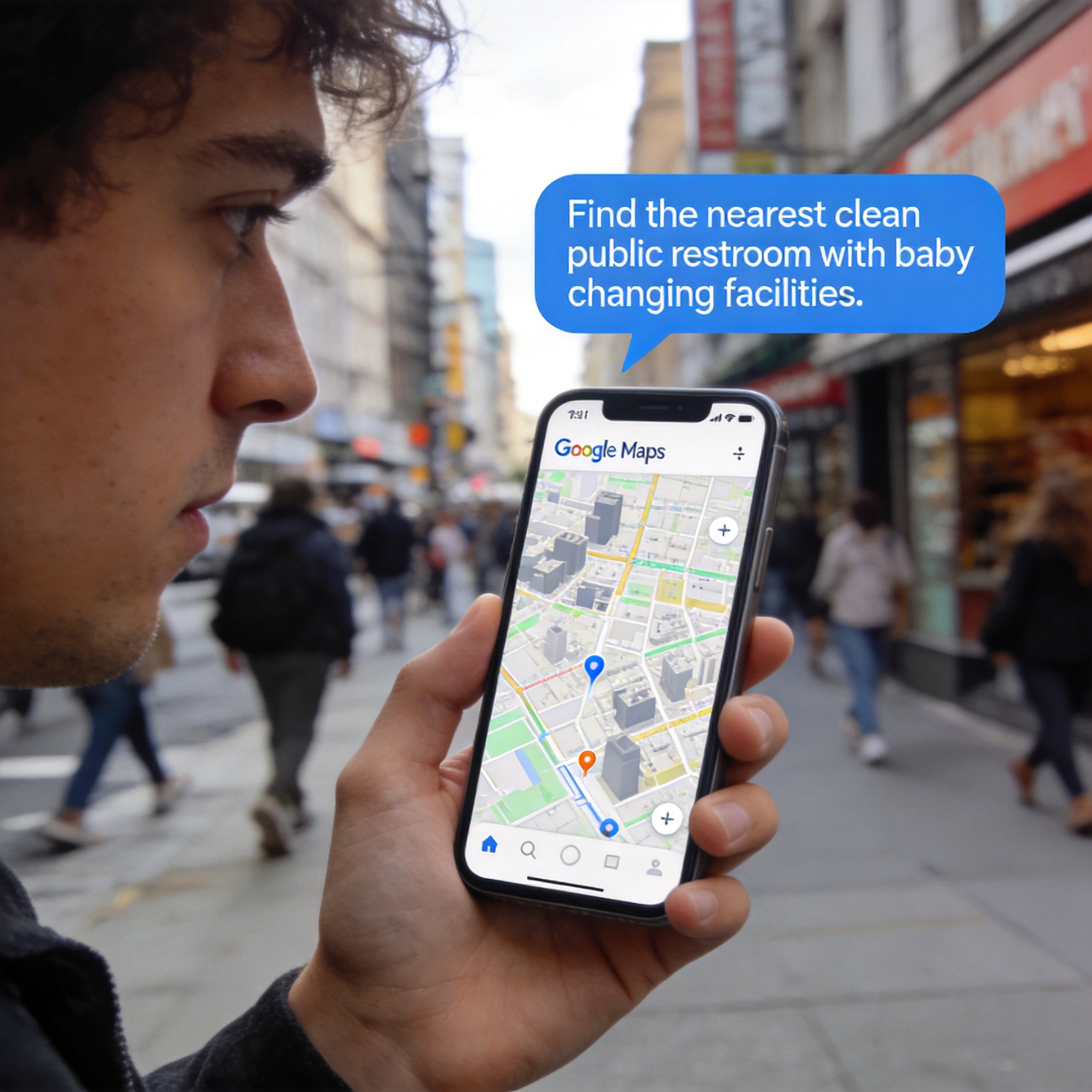
Smartphone showing Google Maps with conversational AI query for a public restroom.
Conversational Search with Ask Maps
Ask Maps enables users to interact with Google Maps through natural language, addressing nuanced search problems. For instance, users can ask for "the nearest and cleanest public restroom" or "public tennis courts that are currently lit and available." This capability moves beyond keyword-based retrieval to interpret contextual, conditional, and emotional aspects of user needs.
According to Miriam Daniel, Vice President and General Manager of Google Maps, Gemini's responses are based exclusively on data within Google Maps and do not access information from other applications like Gmail. Personalized content relies on location-related search history in Maps or Google Search, as well as saved or favorited locations within Maps. Andrew Duchi, a Product Manager, confirmed that paid placements do not influence the recommendations provided by Ask Maps.
The Ask Maps feature is currently available on Android and iOS platforms in the U.S. and India, with a desktop version planned for future release.
Personalized Planning and Recommendations
Ask Maps also facilitates highly personalized itinerary planning. Users can describe complex scenarios, such as finding a "cozy place suitable for 4 people at 7 PM tonight" for friends meeting from different locations, with preferences like vegan options. The system leverages past search history and saved locations to suggest suitable venues, streamlining the planning process.
This functionality extends to comprehensive trip planning, allowing users to outline multi-destination road trips. Ask Maps can identify less crowded hiking trails, provide information on obtaining tickets, and generate detailed route plans with estimated arrival times. These recommendations are designed to be personalized, moving beyond generic algorithmic suggestions.
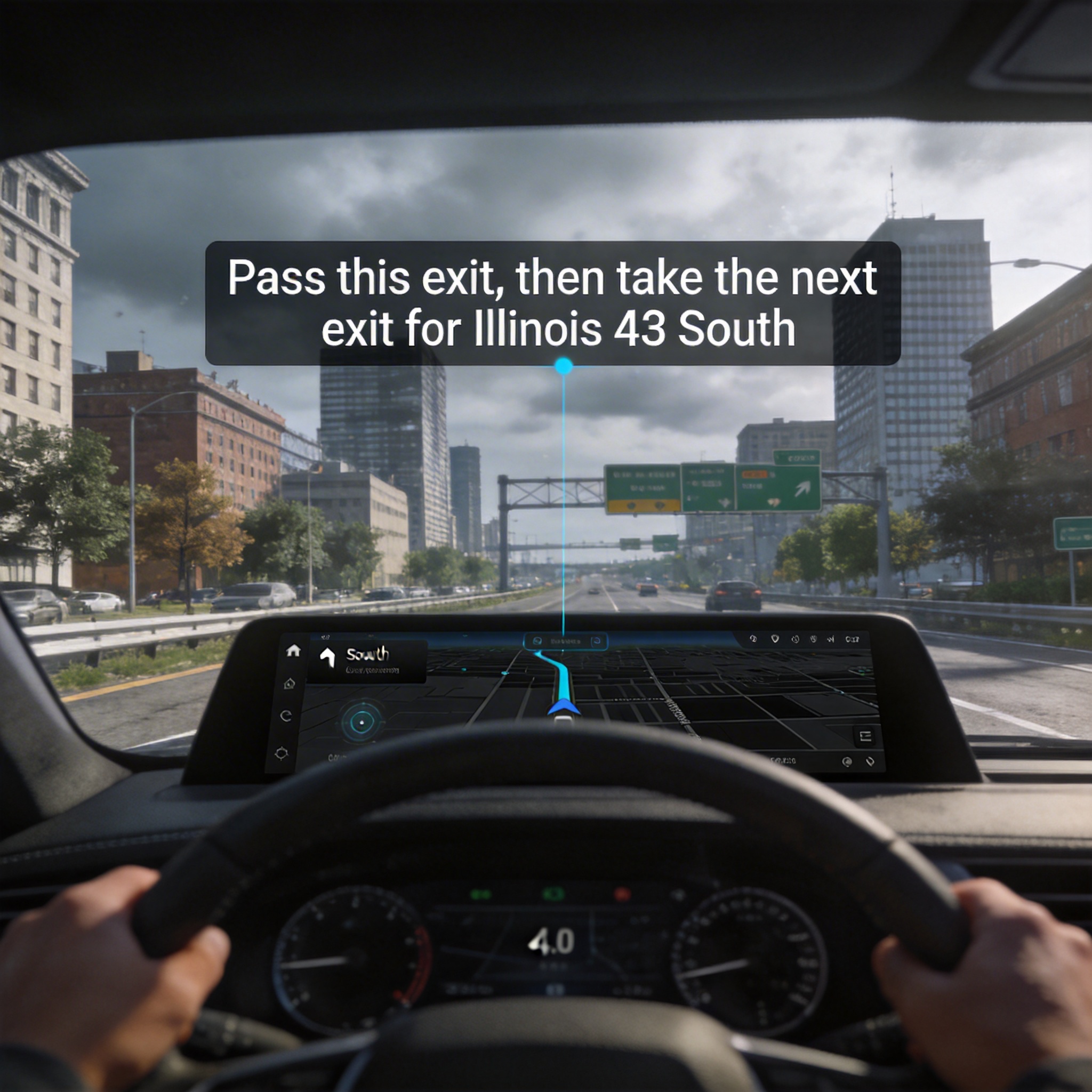
Car dashboard with immersive 3D navigation showing detailed urban environment and contextual directions.
Immersive Navigation for Enhanced Driving Experience
The update also introduces Immersive Navigation, described by Google as the most significant upgrade to its navigation experience in over ten years. This feature redefines the visual and auditory aspects of driving guidance.
Immersive Navigation presents a vivid 3D view of the environment, replicating buildings, overpasses, terrain, and roadside greenery. It utilizes Gemini to analyze Street View and aerial imagery, highlighting critical elements like lanes, crosswalks, traffic lights, and stop signs. Smart zooming and transparent building effects aim to provide clear visibility of complex road conditions.
Voice guidance has also been enhanced to be more intuitive. Instead of standard distance-based instructions, the system provides contextual directions, such as "Pass this exit, then take the next exit for Illinois 43 South," complemented by visual cues. This builds on Google's previous efforts to incorporate landmarks into navigation instructions.
The underlying technology for these advancements is Gemini's ability to interpret and reproduce the structural details of the real world, rather than just coordinates.

Neural network overlaying a city street, symbolizing AI's interpretation of real-world structures.
Real-time Data and Last-Mile Solutions
Google Maps integrates over 5 million global traffic updates per second and processes more than 10 million daily reports from its user communities, including Google Maps and Waze, covering road construction and incidents. This data network informs Ask Maps about trade-offs between alternative routes, such as identifying routes that are longer but less congested, or faster but involve tolls.
Immersive Navigation also addresses "last-mile anxiety" by providing solutions for parking and destination arrival. Before starting a journey, users can preview destinations via Street View for parking suggestions. As they approach, Maps highlights building entrances, nearby parking, and specifies which side of the street to park on.
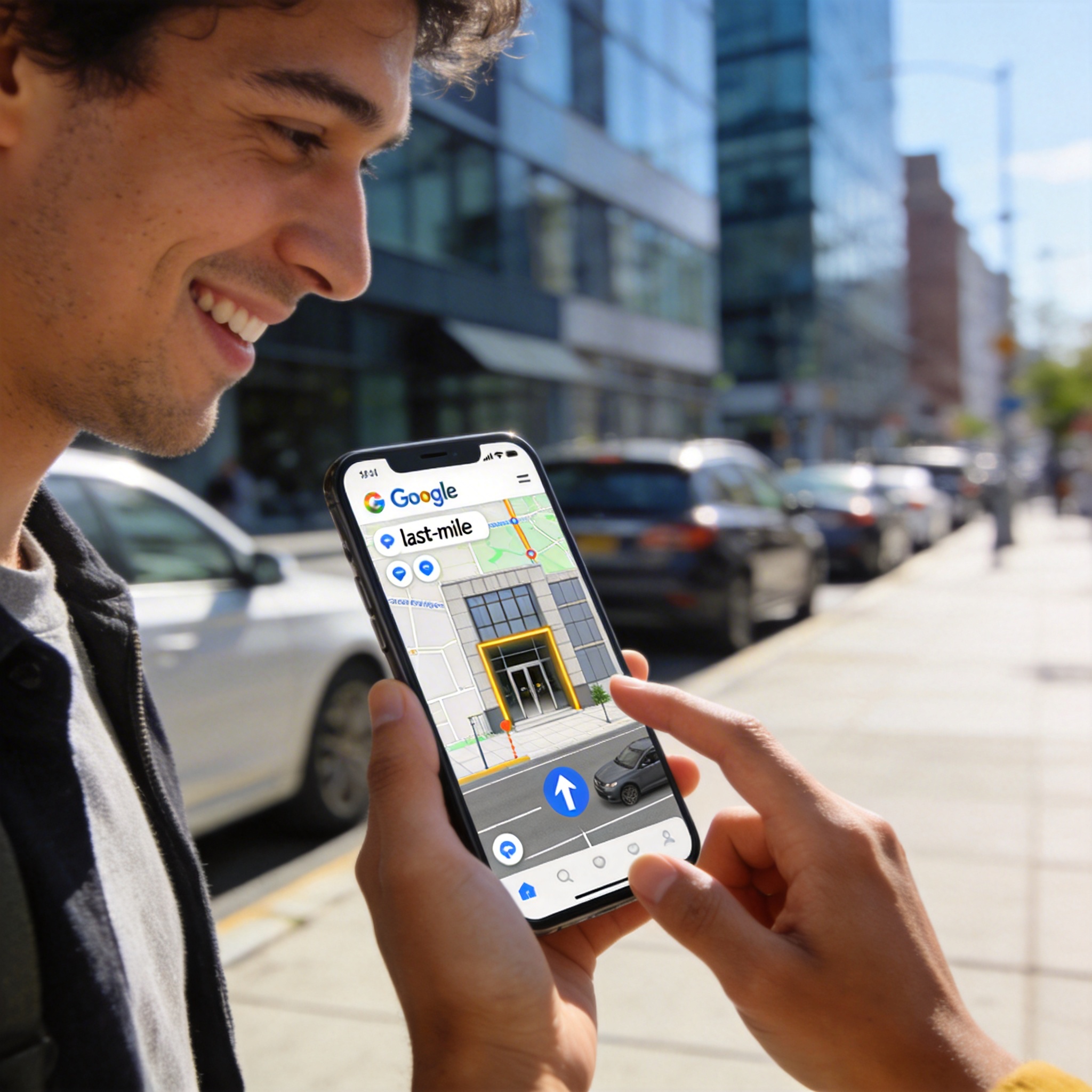
Person using Google Maps for last-mile navigation, showing parking and building entrance details.
Miriam Daniel stated that the goal is to eliminate guesswork from travel. The integration of Gemini with Google Maps' extensive database—covering over 300 million locations and supported by 500 million contributors—aims to create an intelligent urban guide that understands human intentions and facilitates real-world actions.
Stay Ahead of the AI Curve
Join 50,000+ subscribers getting the latest AI tools, trends, and tutorials delivered to their inbox weekly.
No spam, unsubscribe at any time.