
Google Introduces Generative UI: A Paradigm Shift in AI-Driven Interactive Experiences

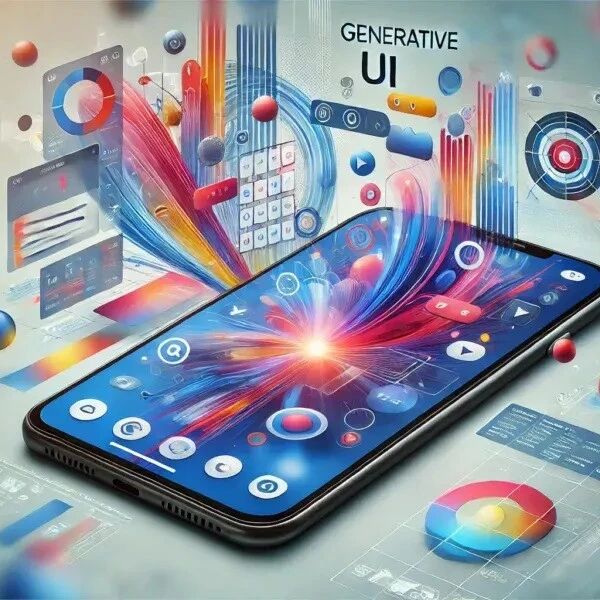
Google Research has unveiled Generative UI (Generative User Interface), a new technological paradigm that enables AI models to automatically generate complete visual and interactive user interfaces. This development extends AI capabilities beyond content generation to the dynamic creation of web pages, tools, games, and applications, marking a significant evolution in human-AI interaction.
Key Highlights
Dynamic Interface Generation: AI can now create customized visual and interactive user interfaces from simple or complex prompts.
Shift from Text to Interaction: Moves human-AI interaction from text-based conversations to co-creation through dynamic interfaces.
Integration into Google Products: Features are being integrated into the Gemini App (Dynamic View) and Google Search's AI Mode.
Technical Framework: Relies on tool access, system-level instructions, and post-processing for functional and consistent output.
Broad Applications: Expected to revolutionize education, science communication, and professional data analysis by visualizing abstract concepts and generating interactive tools.
Background / Context
Traditional AI interaction methods have been limited by their reliance on linear text output, which often proves insufficient for presenting complex knowledge, spatial relationships, or interactive tasks. Recognizing this limitation, Google's research team explored how AI could directly generate suitable interfaces to address user queries more effectively. This inquiry led to the development of Generative UI, an AI system designed to instantly design and implement interactive interfaces based on user prompts.
Technical / Strategic Details
Generative UI represents an AI capability that generates complete, interactive, visual, and task-oriented user experiences from natural language prompts. These generated outputs can include runnable web pages, operable tools, visual dashboards, interactive simulation scenarios, and educational environments. Unlike pre-designed templates, these interfaces are generated in real-time by AI in response to a user's request.
For instance, a query about RNA polymerase could result in a dynamic page featuring animations, highlighted transcription steps, and interactive elements to explore cellular differences. This capability is currently implemented experimentally in the Gemini App's "Dynamic View" and Google Search's AI Mode.
In the Gemini App, "Agentic Coding" allows the AI to generate independent interface logic for each prompt, adjusting content hierarchy based on target users and creating educational tools or business presentations. For example, a request to explain the microbiome to a five-year-old could generate an educational page with illustrations and animations.
In Google Search's AI Mode, the search engine constructs an interactive explanatory environment instead of merely providing text summaries. A search for "physical principles of the three-body problem" could yield an interactive simulation allowing users to adjust parameters and observe real-time trajectory changes. This feature is available to Google AI Pro and Ultra users in the US, accessible via the "Thinking" option in Search AI Mode.
The implementation architecture of Generative UI, detailed in Google's paper "Generative UI: LLMs are Effective UI Generators," comprises three core components:
Tool Access: The AI can access external tools such as image generation systems (e.g., Imagen), search engine results, code execution modules, graphics rendering, and simulation environments. This enables the AI to generate functional interfaces rather than just text.
System-Level Instructions: The AI receives strict background instructions defining the interface type, code format, design style, and error avoidance specifications, ensuring functional, structured, and consistent output.
Post-Processing: Algorithms perform corrections and safety checks on the AI's output, verifying code functionality, correcting errors, maintaining visual consistency, and ensuring safe content delivery.
Industry Relevance
Generative UI signifies a paradigm shift in Human-Computer Interaction (HCI), moving towards AI-generated interactive interfaces. This approach suggests that future interfaces will be instantly generated by AI based on context and user needs, rather than being pre-designed. This development is seen as a step towards "environment-generating intelligence," where AI not only answers questions but also constructs spaces for understanding and exploration.
In education and science communication, Generative UI can visualize abstract knowledge interactively, allowing concepts to be "seen," data to be "manipulated," and knowledge to be "experienced." For professional assistance and data analysis, it can automatically generate operable data dashboards, simulated experimental interfaces, and business decision visualization systems. This redefines the concept of an "interface," potentially eliminating the need for users to download specific applications or learn complex tools, as AI could generate tailor-made interactive environments on demand.
Outlook
This technology suggests a future where AI creates entirely new intelligent experiences by dynamically generating interactive environments.
Stay Ahead of the AI Curve
Join 50,000+ subscribers getting the latest AI tools, trends, and tutorials delivered to their inbox weekly.
No spam, unsubscribe at any time.