
China Activates Over 30,000 Domestic AI Computing Cards for Large Language Models
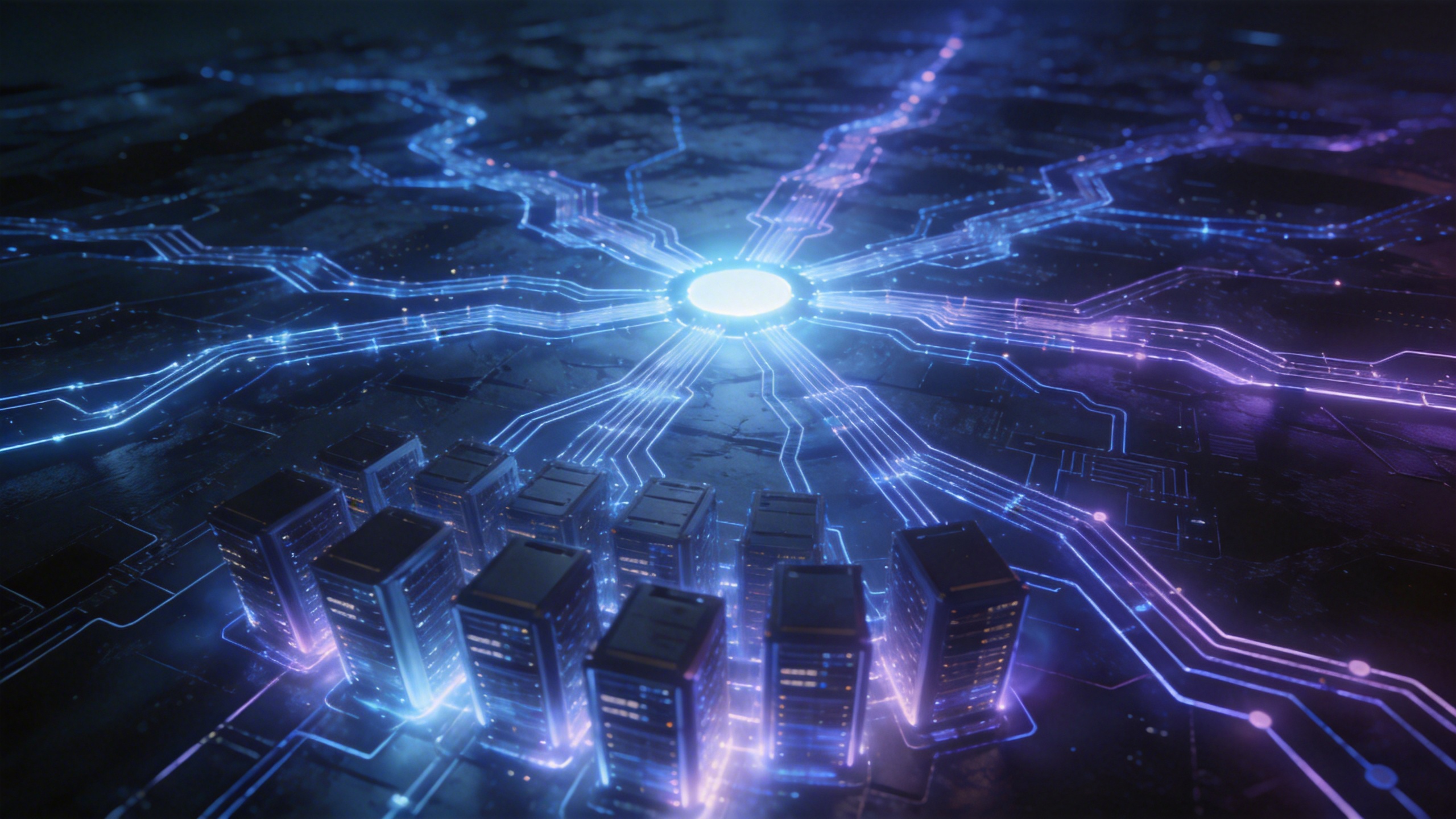
China has deployed over 30,000 domestic AI computing cards, creating a large-scale computing power pool to support the development of trillion-parameter large language models. This initiative aims to reduce reliance on foreign technology and establish a national computing infrastructure.

Split image: vintage oil derrick on left, modern server rack on right, symbolizing past and present strategic resources.
Historically, China faced resource scarcity, notably in oil during the 1920s, overcoming initial foreign skepticism to achieve self-sufficiency. A similar challenge is now being addressed in high-end computing, where access to advanced chips, ecosystems, and computing clusters has been restricted. Computing power, particularly at the ten-thousand-card level, is viewed as a strategic resource for the new industrial era, akin to oil in the past.
National Computing Power Strategy
The Ministry of Industry and Information Technology (MIIT) issued a notice on February 6, 2026, outlining the construction of a national computing power interconnection node system. This "1+M+N" framework includes one national service node, multiple regional nodes, and numerous industry nodes. This initiative signals a top-down strategy to manage computing power as a new form of infrastructure, emphasizing unified planning, standards, and rules. The goal is to establish "ten-thousand-card large computing power + trillion-parameter large models" as a core path for China's AI industry.

Close-up of an AI chip with a subtle overlay of a profit margin graph, illustrating ecosystem control.
The high cost of computing power is often attributed to supply-demand imbalances. However, a deeper issue lies in the ecosystem control exerted by upstream providers, which allows them to command significant pricing power. NVIDIA, for instance, reported a gross profit margin of approximately 75% in fiscal year 2025, reflecting the value of its integrated ecosystem.
Leading technology companies often pursue vertical integration, optimizing the entire stack from chips to applications. This "system-level co-design" approach, exemplified by Google's TPU system, is effective but requires substantial resources and is primarily suitable for a few large players. For a nation, a more vital approach is an open architecture that supports various accelerator cards and integrates with mainstream software ecosystems, lowering barriers to entry. This open route is seen as crucial for fostering a broad AI application ecosystem.
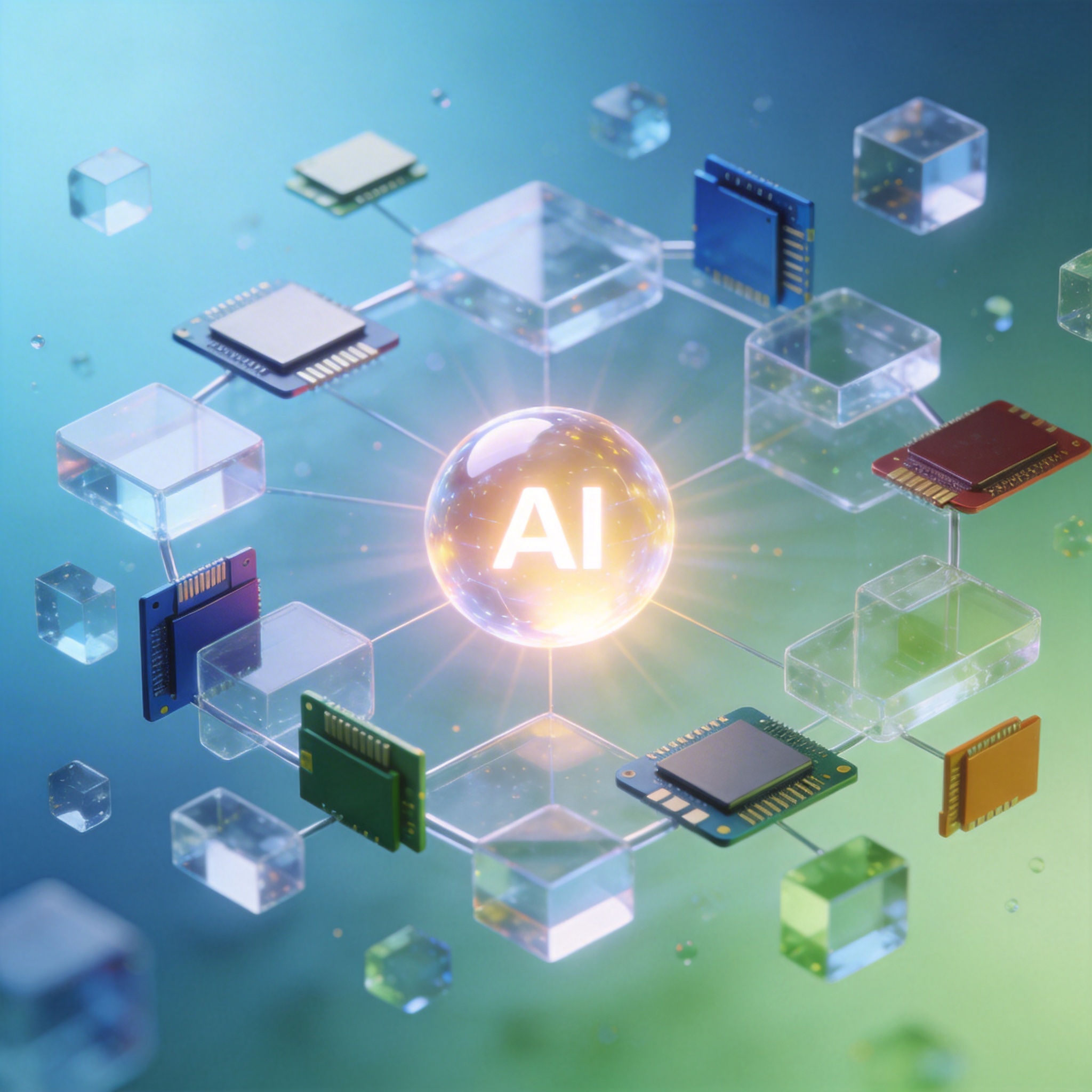
Abstract representation of an open architecture with interlocking geometric shapes, symbolizing diverse AI components.
Overcoming Bottlenecks
The global AI competition has intensified, with advanced computing power becoming a critical bottleneck for China's AI industry. The strategy now focuses on building an independent and controllable technical system, ensuring domestic computing power is not only available but also efficient, stable, and cost-effective for both training and deployment.
On February 10, the Guanghe Organization hosted a seminar in Zhengzhou, focusing on empowering large model development with domestic ten-thousand-card computing power. Key consensuses emerged from the meeting:
Autonomous computing power: A ten-thousand-card autonomous cluster is considered essential for the foundational stability of domestic trillion-parameter large models.
Supply-demand synergy: Computing power must be actively utilized in applications to avoid becoming an underutilized asset.
Full-stack integration: Connecting all layers, from chips to applications, is necessary to transition from basic functionality to advanced usability.
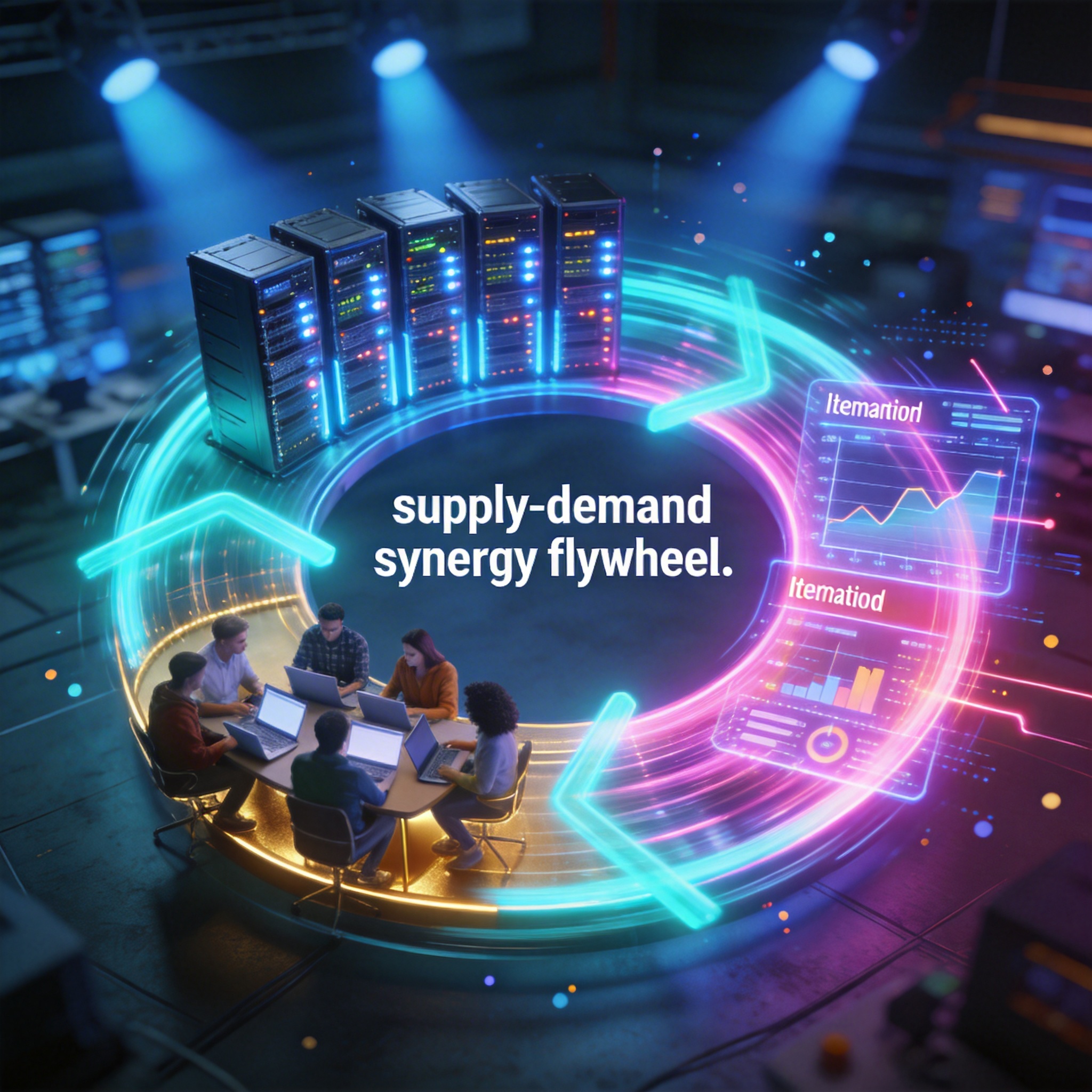
Dynamic image of a 'supply-demand synergy flywheel' connecting computing power, model training, and data iteration.
Supercomputing Internet and Large Model Development
The development of current large models requires deep integration with underlying software and hardware systems. Li Lun, Director of the Software, Hardware, and Ecosystem Department at the China Academy of Information and Communications Technology's Artificial Intelligence Research Institute, noted that the software and hardware ecosystem will be central to future model innovation and intelligent computing facility competition.
On February 5, the core node of the National Supercomputing Internet began trial operations in Zhengzhou. This deployment includes three Sugon scaleX ten-thousand-card superclusters, totaling over 30,000 cards, establishing the largest operational domestic AI computing power pool.
Leveraging these resources, the "Domestic Large Computing Power + Domestic Large Model Joint Research Special Plan" was launched. This plan allocates an exclusive ten-thousand-card resource pool for partners developing trillion-level models from scratch and a thousand-card resource pool for selected partners focusing on vertical applications. This initiative aims to provide domestic computing power directly to domestic large models.

AI researchers focused on development, free from cluster troubleshooting, in a modern office.
The availability of ten-thousand-card clusters as "usable computing power" is expected to transform production methods. Computing power can now be stably called, uniformly orchestrated, and continuously operated, similar to cloud computing resources. This allows model teams to concentrate on core tasks like data, training strategies, and evaluation, rather than spending time on cluster adaptation and troubleshooting.
This stable computing foundation is anticipated to reduce trial-and-error costs, shorten iteration cycles, and lower participation thresholds for innovation. The "supply-demand synergy flywheel" suggests that increased computing power availability will lead to more model training, more online applications, greater real demand, and faster iteration, further enhancing computing power availability.
By integrating ten-thousand-card clusters with the supercomputing internet, domestic trillion-parameter large models can move from laboratory pilots to industrial-scale applications, overcoming previous computing power constraints. The MIIT's "1+M+N" system reflects a national commitment to securing computing power, which is seen as essential for leadership in the intelligent era. This effort aims to achieve computing power self-reliance through a verifiable engineering system.
Stay Ahead of the AI Curve
Join 50,000+ subscribers getting the latest AI tools, trends, and tutorials delivered to their inbox weekly.
No spam, unsubscribe at any time.