
App Store Sees 60% Surge in New Submissions Driven by AI-Powered "Vibe Coding"


The Apple App Store has experienced a significant increase in new application submissions, with numbers rising by 60% since the second half of 2024. This surge, which saw monthly submissions jump from approximately 50,000 to 78,000, is attributed to the growing adoption of AI-driven development practices, dubbed "Vibe Coding."
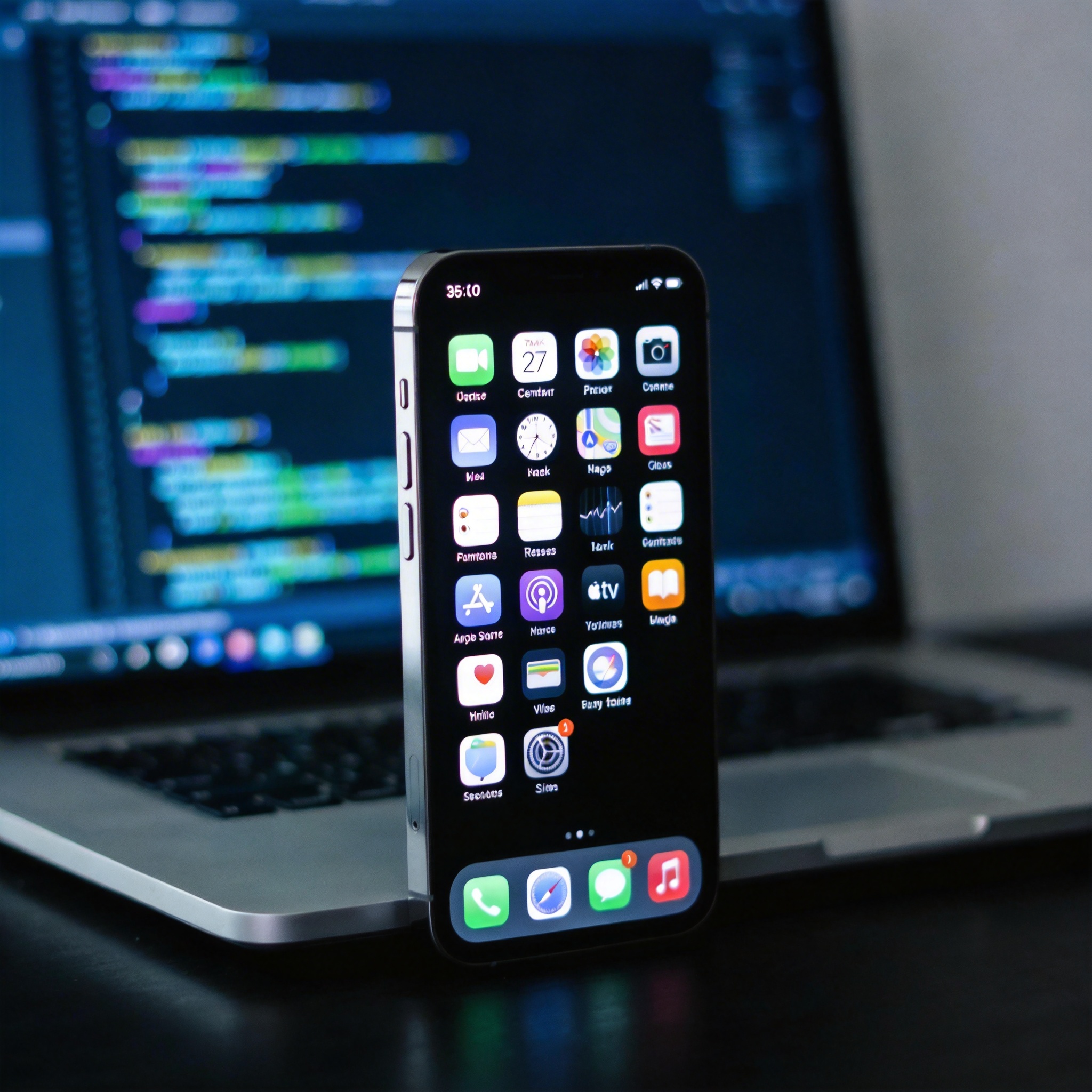
Smartphone displaying a minimalist app interface, with blurred code lines in the background.
This new approach, characterized by its rapid development cycles, is enabling individuals and small teams to create and submit applications at an unprecedented pace.
The Rise of Vibe Coding
Vibe Coding, a term coined by Andrej Karpathy, former head of AI at Tesla, describes a development method where intuition and natural language prompts are used to guide AI tools in generating code. This contrasts with traditional programming, which requires deep understanding of syntax and complex architectural principles.
In the conventional model, developing a new iOS application from concept to submission typically involves a team of product managers, UI designers, and developers, often taking two to three months. With Vibe Coding, using tools like Cursor in conjunction with large language models such as Claude 3.5 Sonnet, this process can be compressed to as little as 24 hours.

Abstract representation of a 'Cambrian Explosion' with glowing app icons emerging from a network of light.
This acceleration has led to a "Cambrian Explosion" of new apps, primarily minimalist tools, AI assistants, and niche lifestyle applications. Sensor Tower data projects that non-game app revenue in the mobile market will surpass game app revenue for the first time in 2025, reaching $85.6 billion. The App Store is expected to see 557,000 new app submissions in 2025, a 24% increase from 2024, marking the first substantial growth since 2016. For developers, the low cost of failure in this model allows for rapid iteration and frequent new launches.
AI Tools Powering the Shift
The core of Vibe Coding relies on advanced AI tools. Claude 3.5 Sonnet is frequently cited for its ability to handle UI layouts, interaction details, and interpret vague instructions, earning it the nickname "Sonnet Coder." Its flexibility in generating code, even for complex visual elements like CSS, streamlines the development process.
Integrated Development Environments (IDEs) are also evolving to support this paradigm. Cursor, a leading AI-native IDE, has incorporated OpenAI's o3-mini-high model for enhanced code understanding. Windsurf, another contender, offers an agent-based interaction system at a competitive price point, attracting developers focused on cost-efficiency.
For individual developers, cost-effective models like DeepSeek R1, combined with plugins such as Roo Code, provide an affordable way to experiment with Vibe Coding, significantly reducing the financial barrier to entry for app development. This combination of powerful AI models and accessible tools has transformed app creation into an industrialized assembly line.
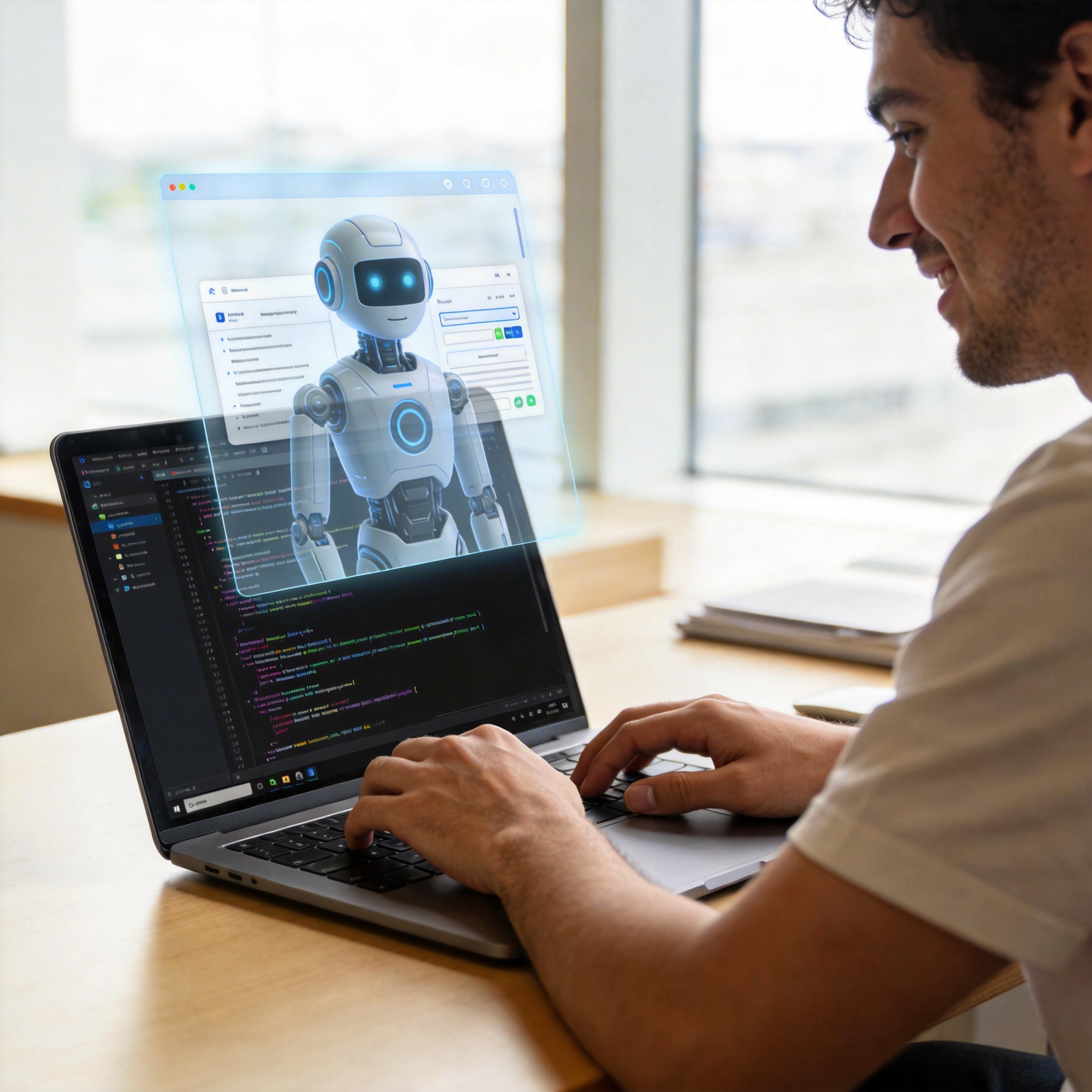
Developer working on a laptop with an AI assistant interface overlay, in a modern office.
Concerns Over Technical Debt and Quality
Despite the efficiency gains, Vibe Coding has raised concerns among experienced software engineers. Critics argue that while AI can generate functional interfaces, the underlying code often lacks architectural design and can accumulate significant technical debt.
Namanyay Goe, a senior developer, warns that Vibe Coding encourages developers to cede control over the codebase. He highlights the risk of subtle logical crashes in production environments that developers, accustomed to adjusting "vibe" rather than understanding underlying logic, may be ill-equipped to fix. The practice of quickly accepting AI-generated changes without thorough human review is seen as undermining traditional software engineering principles, potentially leading to security vulnerabilities and redundant code in new applications.
Even Karpathy, a proponent of Vibe Coding, emphasizes the need for rigor. He notes that while Vibe Coding is suitable for local demonstrations, deployment often requires substantial manual intervention, configuration, and review. Karpathy himself manually refactors complex repositories and meticulously scrutinizes AI-generated code, stating that blindly accepting code without understanding its logic is "asking for trouble." This suggests that while AI accelerates initial development, human oversight remains crucial for robust and maintainable applications.

Human hands reviewing code on a tablet, with abstract AI-generated code in the background, symbolizing oversight.
Apple's Response to the Surge
As developers embrace Vibe Coding, Apple has begun to implement stricter App Store Review Guidelines. Updates at the end of 2025 introduced two key rules: 4.1(c) targets AI-generated "skin-changing apps" that attempt to mimic existing applications, and 5.1.2(i) mandates explicit user authorization for all data transfers involving third-party AI services, such as OpenAI APIs.
These rules indicate Apple's intent to curb the proliferation of low-quality or deceptive applications generated through rapid AI development. Apps that fail to disclose data flows or are merely shells for API calls risk non-compliance and removal. Apple's actions suggest a move to maintain the quality and integrity of its App Store ecosystem, recognizing that while AI can boost submission numbers, it also introduces a volume of "industrial waste" that may compromise user experience. The company's stance underscores that mere code stacking, without strong aesthetic and human-centric design, may not suffice for long-term success within its platform.
Stay Ahead of the AI Curve
Join 50,000+ subscribers getting the latest AI tools, trends, and tutorials delivered to their inbox weekly.
No spam, unsubscribe at any time.