
Anthropic’s Head of Design Discusses AI’s Impact on Traditional Design Processes

Jenny Wen, Anthropic's Head of Claude Design, recently discussed the profound shifts occurring in the design field due to advancements in artificial intelligence. Wen, who leads design for Claude Co-work and previously held a Design Director role at Figma, shared her insights on how AI is reshaping traditional design methodologies, the evolving role of designers, and future hiring trends.

Abstract representation of the 'Double Diamond' design process dissolving and reforming, symbolizing rapid change.
The Evolving Design Process
Wen asserts that the traditional design process, often characterized by the "Double Diamond" model of divergent and convergent thinking, is effectively "dead." This shift is primarily driven by the rapid pace of engineering in the AI era. She noted that the time designers spend on creating mockups has significantly decreased from 60-70% to 30-40%, with the freed-up time now dedicated to collaborating with engineers or even writing code.
Vision planning has also seen a dramatic compression, shrinking from a 2-5 year outlook to 3-6 months. The format has transitioned from polished presentations to more directional prototypes. Wen highlighted that this acceleration means even her own observations on design changes, made just a few months prior, quickly become outdated.
She categorizes current design work into two main areas: supporting execution and creating vision. In the former, designers act more as consultants, guiding engineers who are rapidly prototyping ideas, often with AI assistance. For vision creation, the focus is on short-term, tangible prototypes rather than long-range, elaborate presentations.

Designer and engineer collaborating on code in a modern AI lab, hands pointing at screen.
A Designer's Day in an AI Lab
Wen described her daily routine at Anthropic as heavily focused on "keeping up" with the rapid developments across various internal teams and projects. Her work involves tracking model advancements and internal debates, which directly inform her design preparations.
Her time allocation has shifted dramatically:
Previously: 60-70% on mockups/prototypes, 20% on engineer collaboration, 10% on coordination.
Now: 30-40% on mockups/prototypes, 30-40% on direct engineer collaboration, plus time spent writing code.
When collaborating with engineers, Wen emphasizes explaining the "why" behind design decisions, such as user research findings, rather than simply dictating changes. She also guides engineers to utilize existing design system components, as AI-generated code may not always adhere to these standards.
Her AI tool stack includes Claude Co-work for long-running tasks and Claude Code within VS Code for front-end refinement. She noted a workflow where Claude can automatically fix and commit code for minor issues, which she then merges.
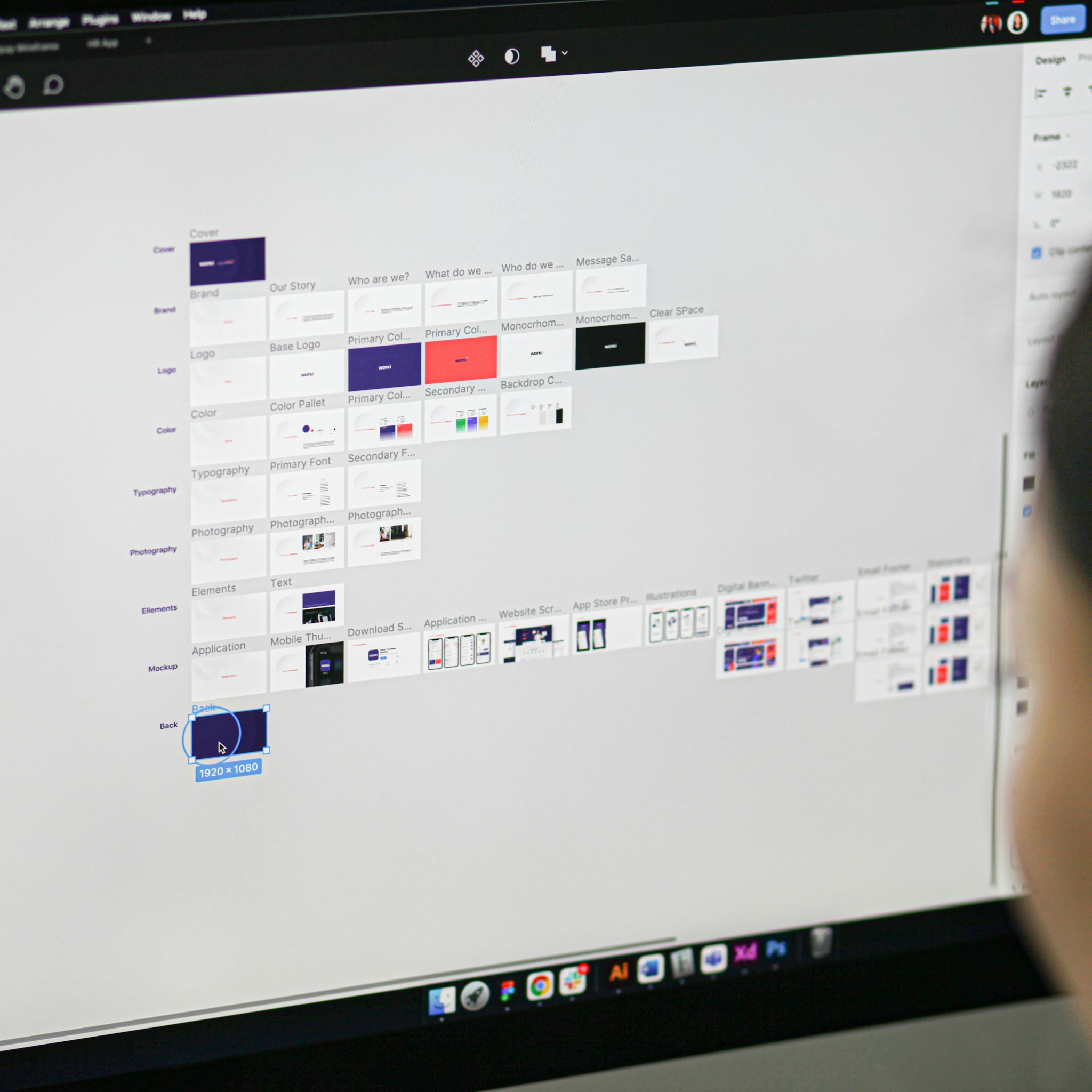
Figma design interface showing collaborative work on a digital canvas.
The Enduring Value of Figma
Despite the shift towards code, Wen, a former Figma Design Director, affirmed the continued importance of the platform. She explained that while code tools are linear, Figma's canvas remains superior for divergent exploration, allowing designers to brainstorm multiple approaches and refine visual elements side-by-side. This capability is crucial for fine-tuning layouts, fonts, and styles more efficiently than repeatedly switching within code.
Human Value in Decision-Making and Responsibility
Wen addressed the question of AI's growing capabilities in taste and judgment, acknowledging that AI will continue to improve in these areas. However, she stressed that "a lot of the hard parts of building software are actually, like, not building it." The most challenging aspects often involve interpersonal disagreements about whether and how a feature should be built. While AI can inform these discussions, it cannot resolve the human element of decision-making and responsibility.
She drew an analogy to radiology, where AI might excel at diagnosis, but a human is still required to sign off and bear responsibility. Wen conceded that the speed of AI's improvement in these domains might be underestimated.

Human hand and AI hand reaching towards complex digital decision network, symbolizing human responsibility.
The Future of User Interfaces
Wen anticipates a future where user interfaces combine clickable graphical elements with conversational AI. She noted that while chat paradigms offer infinite communication possibilities, traditional UI remains more direct for specific tasks. The trend, she believes, will involve models dynamically generating more UI components.
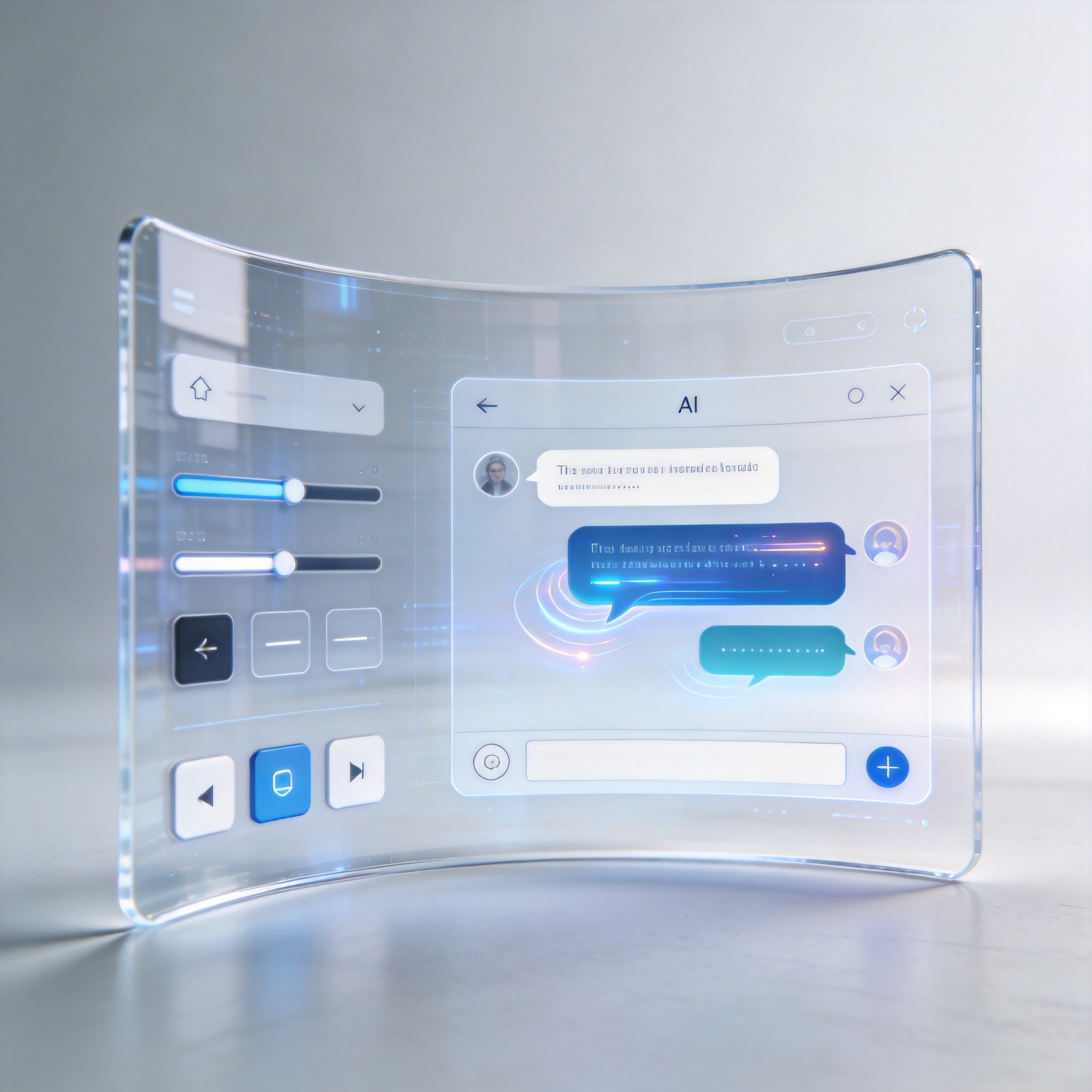
Futuristic user interface combining graphical elements with conversational AI chat.
From Director to Individual Contributor
Wen shared her decision to transition from a Design Director role at Figma to an Individual Contributor (IC) at Anthropic. This move was driven by a desire to personally experience the evolving tools and processes in the AI era, as well as an anxiety about the future of middle management. Her experience as an IC provided her with new hard skills and a deeper understanding of the challenges faced by design teams. She suggested that design managers should undertake "hands-on rotations" as ICs to stay abreast of technological changes.
The Real Story Behind Claude Co-work
Addressing the widely circulated claim that Claude Co-work was built in 10 days, Wen clarified that this was the sprint time from an internal version to its external launch. The project involved extensive prior prototyping and exploration of various agent frameworks. She emphasized that brand trust is built not on perfect launches, but on rapid response to user feedback and demonstrating progress.
Desired Designer Profiles
When hiring designers in this rapidly changing environment, Wen prioritizes resilience and adaptability. She is particularly interested in three types of candidates:
Square-shaped strong generalists: Individuals with an 80th percentile skill level across multiple dimensions, rather than being deep in one area and shallow in others.
Deep T-shaped specialists: Experts in a specific domain, such as highly technical designers or top visual design specialists, whose deep expertise creates differentiation.
Junior designers with craftsmanship: Early-career individuals who are quick learners, possess maturity beyond their years, and are unburdened by outdated process mindsets.
Wen advises young designers to actively build projects and embrace a "maker" mentality. While not advocating for learning React from scratch, she recommends incorporating AI coding tools into their skill set, anticipating that abstraction layers will continue to simplify coding for designers.
When asked if Claude could be hired as a designer, Wen stated that it is "not good enough yet," noting that it doesn't fit any of her desired archetypes. However, she acknowledged Claude's significant improvement in this area over the past year.

Abstract visualization of 'illegible' but energetic ideas, with swirling data and emergent patterns.
Counterintuitive Management Wisdom
Wen shared several insights on team management:
High-leverage "low-leverage" tasks: Leaders who actively engage in tasks typically considered "low-leverage," such as product testing or debugging, can build deep product familiarity and signal to the team that no task is beneath anyone.
Culture of mutual teasing: A team dynamic where members feel comfortable joking with each other, including managers, indicates trust and psychological safety, which in turn facilitates setting high standards.
Legibility Matrix: Applying Evan Tana's framework, Wen seeks "illegible" but energetic ideas within Anthropic's internal prototypes. These are opportunities that others might not yet understand but show promising convergence of energy, often leading to valuable product features.
Wen's overarching message is that the design world is being fundamentally reshaped by engineering efficiency. Designers must evolve from process gatekeepers to facilitators, embracing new tools and methodologies to thrive in the AI era. The Anthropic design team is actively seeking individuals who are excited by this transformation.
Stay Ahead of the AI Curve
Join 50,000+ subscribers getting the latest AI tools, trends, and tutorials delivered to their inbox weekly.
No spam, unsubscribe at any time.