AI Startup Founders Younger, More Technical, Driven by PhDs, Report Finds
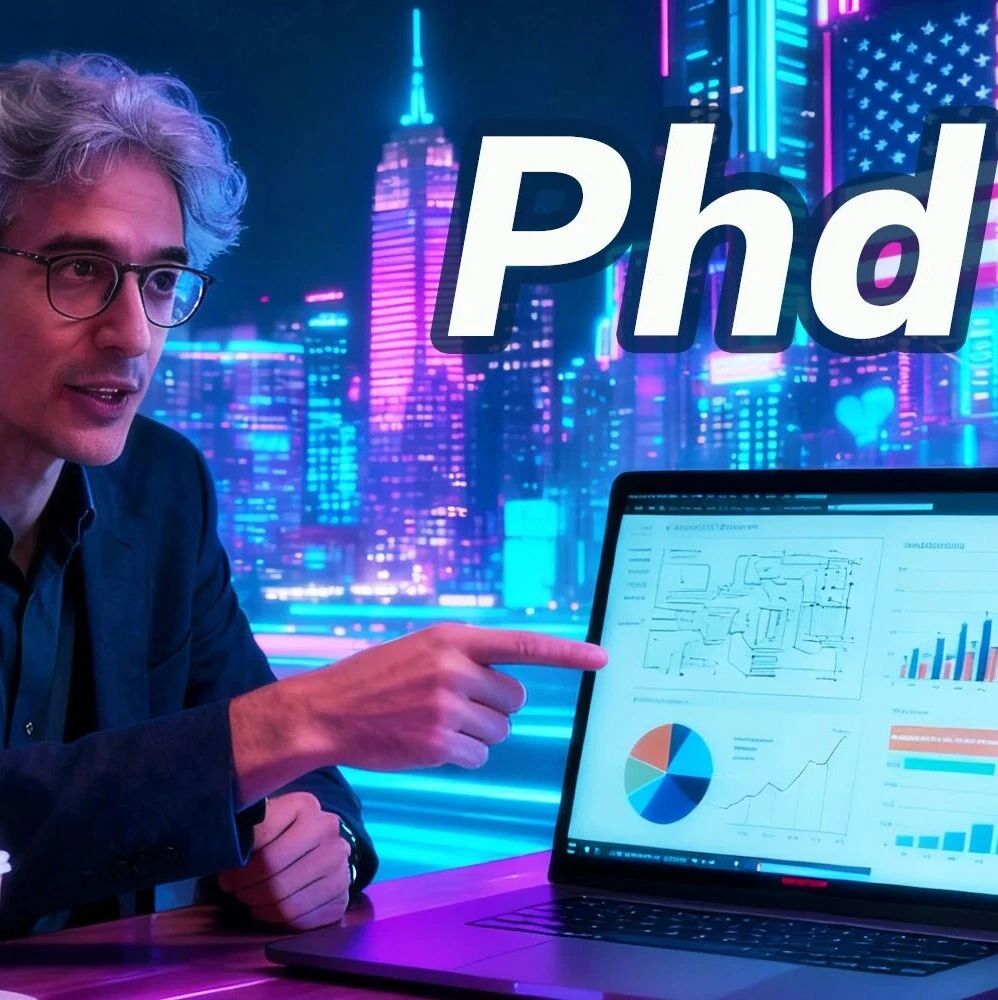
A new report indicates that a doctoral degree is increasingly becoming a prerequisite for entrepreneurs in the artificial intelligence sector, supplanting traditional MBA qualifications. This trend suggests that the era of college dropouts leading major tech companies is becoming an exception, with technically proficient individuals leveraging their research depth to build highly efficient teams.
Jenny Xiao, a partner at Leonis Capital and a former OpenAI researcher, highlighted this shift, stating, "In the AI era, technology itself is the product." She contrasted this with previous startup waves, where technology often served as an enabler for business models, citing platforms like Airbnb and Uber.
Evolving Profile of AI Founders
Today's AI companies are frequently led by CEOs with deep technical backgrounds, including PhDs, Olympiad medalists, and alumni from prominent AI research laboratories. These teams are typically small, agile, and demonstrate high per capita revenue, often five to ten times the benchmark for the SaaS industry. Their experimental approach and proficiency with underlying models enable rapid pivots and quicker achievement of product-market fit, sometimes within months of founding.
Leonis Capital’s report, which systematically compared 100 of the fastest-growing AI startups, found that AI entrepreneurs are more technically inclined than business-oriented. Team members often lack prior collaboration experience. The analysis utilized internal AI research tools and public data.
The report also noted a significant age difference: the median age of current AI founders is 29, compared to 34 for entrepreneurs in the 2010s. The most common age for starting an AI company is 26 or 27. For instance, the founders of the code collaboration tool Cursor left MIT in their early twenties, and Aravind Srinivas, CEO of AI search engine Perplexity, was 28 when he co-founded his company. Founders of the legal tech startup Harvey also began their ventures in their twenties.
Academic Background and Team Structure
Despite the younger age of founders, the prestige of universities remains a significant factor. Over 60% of leading AI founders are graduates of institutions such as MIT, Stanford, and Harvard.
Team structures under these new leaders are also evolving, characterized by smaller sizes, flatter hierarchies, and CEOs often directly involved in multi-level management tasks. Xiao attributed this to AI's ability to automate certain jobs and a broader Silicon Valley trend of companies reducing middle management for efficiency.
AI startups are also demonstrating faster revenue scaling compared to previous tech waves. Leonis cited Cursor, which achieved over $100 million in annual recurring revenue in just one year, a milestone that instant messaging software Slack took three years to reach. This rapid growth is attributed to AI's capacity to replace extensive technical labor and founders' ability to quickly convert technology into revenue.
Diverse Sectors and Funding Landscape
Unlike previous tech waves where single platforms often dominated (e.g., search and social media), the current AI boom sees multiple successful companies coexisting across various fields. This is partly due to a surge in demand and investment, allowing numerous AI startups to thrive simultaneously in the same domain.
In programming, products like Replit's Ghostwriter, Cursor, and Cognition's Devin each offer distinct strengths and have garnered loyal user bases. The creative and content generation fields (images, video, audio) have experienced a "Cambrian explosion," with many early winners emerging, driven by broad demand that no single service can fully meet. Healthcare is another sector with multiple successful AI ventures, reflecting its diverse and complex needs.
Regarding investment, Y Combinator leads seed and angel rounds, supporting over 20% of the top 100 fastest-growing AI startups. However, Andreessen Horowitz and Sequoia dominate Series A and B funding, and are increasingly participating in earlier-stage investments.