
AI Programming Reshapes Developer Roles and Talent Pipelines, Says Former Google Engineer
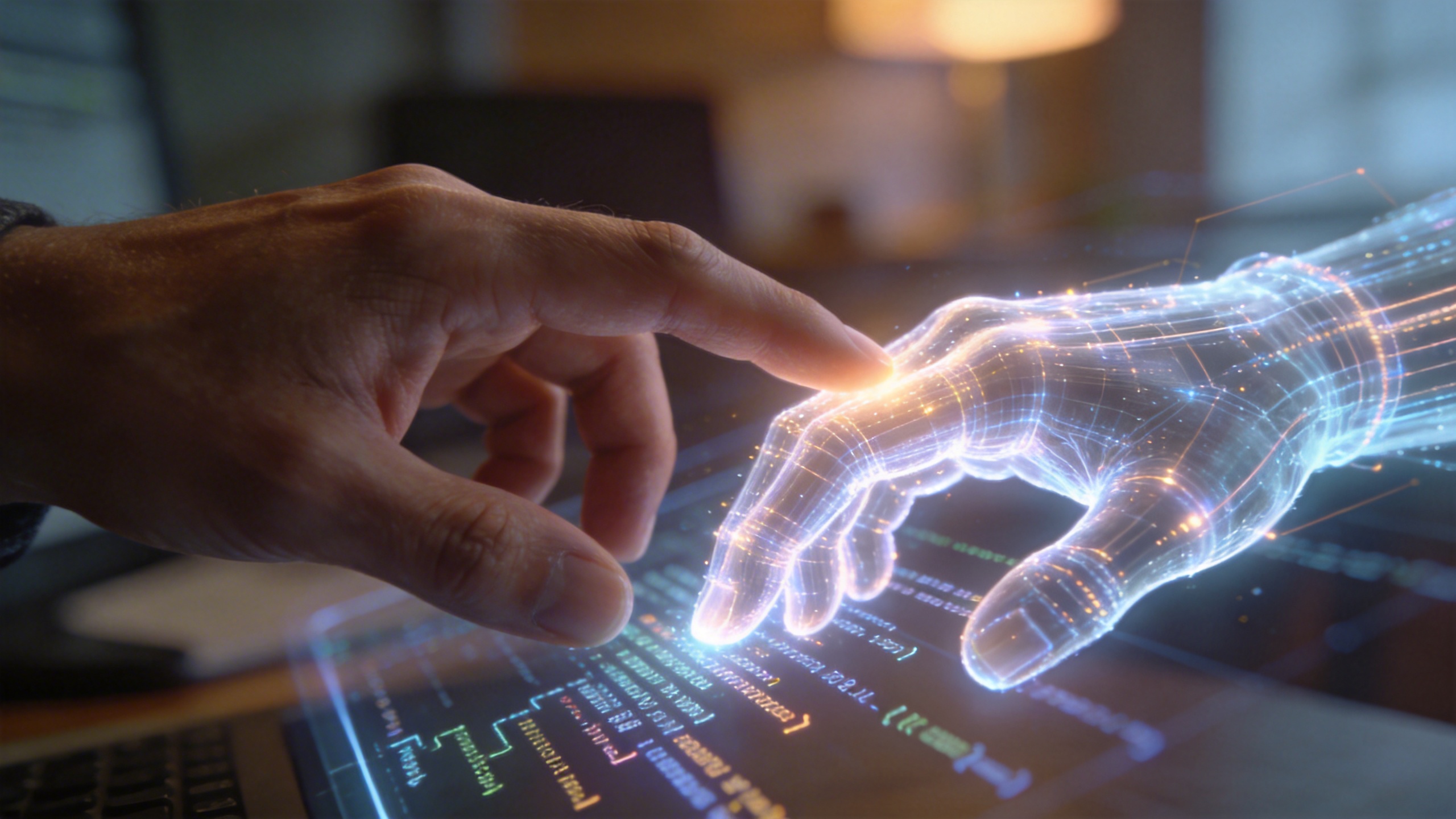
The software industry is approaching a significant transformation by 2025 as AI programming advances from basic auto-completion to autonomous task execution. This shift is prompting a reevaluation of developer roles and the future of the talent pipeline. Addy Osmani, formerly an Engineering Lead for Google Chrome, has outlined five key questions facing software engineering in the next two years, offering guidance for both junior and senior developers.

Junior developers looking at declining employment data, contrasting with a confident senior developer in a bright office.
Impact on Junior Developers and the Talent Pipeline
A Harvard Business School study, analyzing data from 62 million workers, indicates that the introduction of generative AI correlates with a 9-10% drop in employment rates for junior developers within six quarters, while senior positions remain largely unaffected. Major technology companies have reportedly cut campus recruitment by 50% over the past three years. An engineer at Meta was quoted stating, "Why hire a new person for $90,000 when an AI agent costs only one percent of that?" This sentiment reflects an industry trend where senior engineers, augmented by AI, can now accomplish work that previously required a small team, leading companies to quietly reduce junior recruitment rather than implement layoffs.
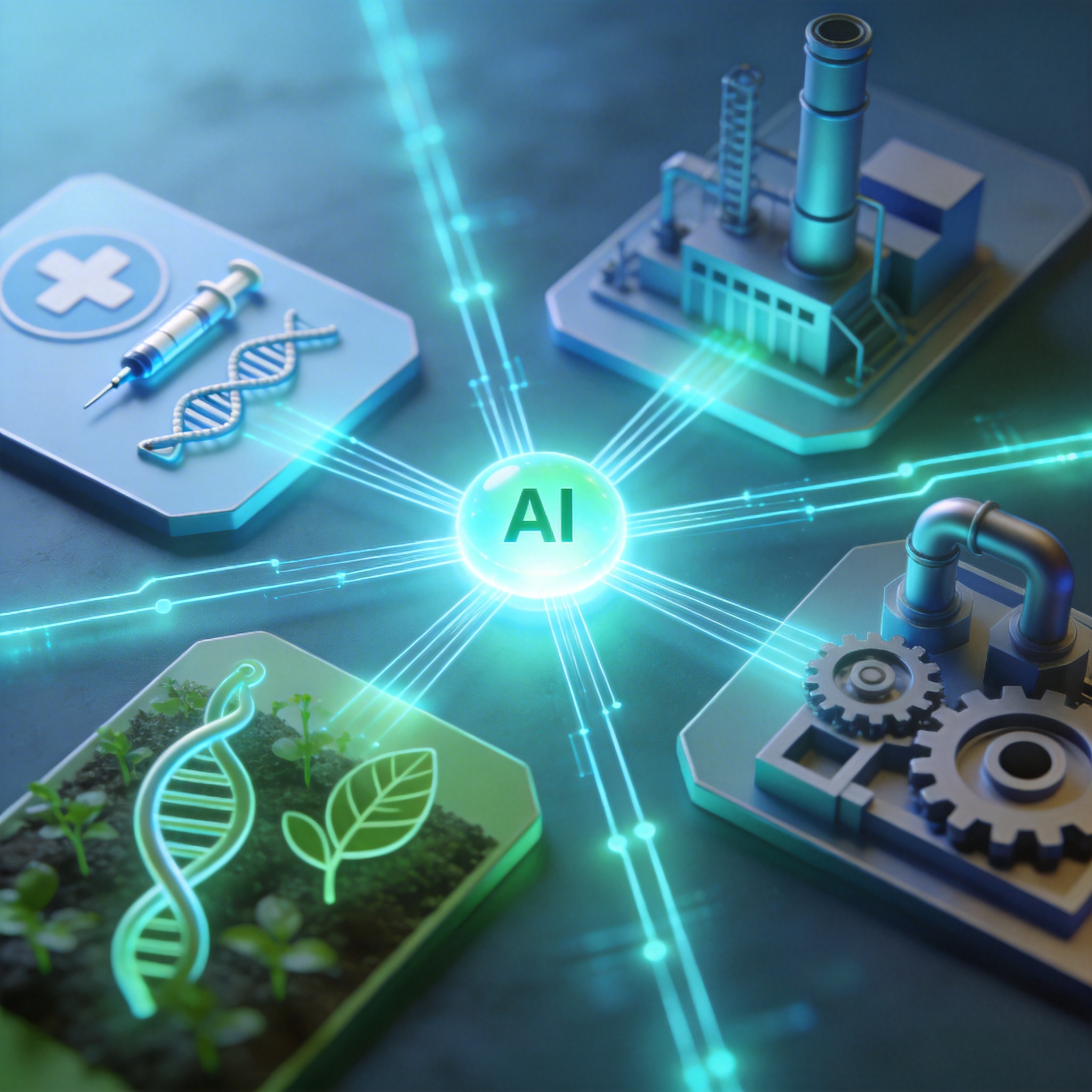
Abstract digital nervous system with data pathways extending into healthcare, agriculture, and manufacturing sectors.
Conversely, AI is also generating new demand for developers across various sectors. Industries such as healthcare, agriculture, manufacturing, and finance are integrating "AI+X" strategies to reshape their ecosystems. This suggests that AI is not replacing developers but rather acting as a multiplier, extending development work into areas that historically did not employ programmers. The U.S. Bureau of Labor Statistics projects a 15% growth in software jobs from 2024–2034. In an optimistic scenario where companies use AI for "expansion" rather than "downsizing," junior roles could be redefined, requiring humans to capitalize on AI-driven opportunities across all industries.
To adapt, junior developers are advised to become "AI-enhanced immediate combatants," capable of building complete functionalities using tools like Cursor/Antigravity. They should also strengthen communication, problem decomposition, and domain knowledge—skills not yet mastered by AI—aiming to be "plug-and-play engineers" rather than mere trainees.
However, a long-term concern is a potential "leadership vacuum" in 5-10 years if the junior talent pipeline is disrupted. A stagnant training mechanism could lead the software industry into a "slow decline," hindering its ability to cultivate new talent. Senior developers are encouraged to avoid using AI to perform tasks typically assigned to interns. Instead, they should foster a talent pipeline through open-source contributions and cross-departmental mentorship, and communicate the risks of an "all-senior team" to management. The value of senior developers, Osmani suggests, lies in "team leverage" rather than individual productivity.

Empty conference table in a modern office, symbolizing a 'leadership vacuum' in the future of software development.
Evolving Skill Sets and the Risk of Forgetting Core Programming
Approximately 84% of developers use AI daily for assistance. When encountering a bug, the immediate reaction is often to "write a prompt and ask AI" rather than independently analyze the problem. This trend raises concerns that beginners may bypass fundamental learning experiences, such as manually implementing a binary search tree or debugging a memory leak. The focus of programming is shifting from "implementing algorithms" to "asking questions and verifying AI." Senior engineers worry this could create a generation unable to code independently, potentially overlooking hidden vulnerabilities or logical flaws in AI-generated code.
Ideally, AI would handle 80% of routine tasks, allowing humans to concentrate on the most challenging 20%, including architecture, complex integrations, creative design, and edge cases. The widespread adoption of AI has not diminished the importance of deep knowledge; rather, human expertise is more critical than ever. This necessitates "high-leverage engineers" who use AI as a multiplier but possess a deep understanding of AI to use it effectively. Such engineers may not be the fastest coders but are adept at discerning "when not to trust AI." Junior developers are advised to thoroughly understand every line of AI-generated code, treating AI as a "learning coach." They should periodically disable AI to manually write core algorithms, compare versions, and deeply study computer science fundamentals. They should also cultivate skills in areas where AI is less proficient, such as system design, user experience intuition, and concurrent reasoning.

Senior software engineer meticulously reviewing AI-generated code on a monitor, focusing on quality and potential flaws.
Senior developers are positioned as guardians of quality and complexity, focusing on system architecture, security, scalability, and domain knowledge. They should consider potential failure modes, particularly vulnerabilities in AI-generated code. Their responsibilities include defining boundaries for AI usage (e.g., manual review for payment or security code), focusing on creativity and strategy, and continuously monitoring emerging tools. They should also hone judgment, systems thinking, and communication skills, which are considered uniquely human "moats."
Redefining Developer Roles: From Coders to Conductors
With the proliferation of AI programming, one extreme scenario envisions AI fully taking over code production, relegating humans to "auditors" who review, check for errors and biases, and deploy AI-generated code. This shift could transform creators into checkers, potentially replacing the satisfaction of programming with anxiety over risk management.
A more optimistic scenario suggests developers could become "orchestra conductors" in the AI era, assuming responsibilities as architects, general contractors, and product strategists. They would not write every line of code but would define the "melody"—architecture, interfaces, and agent interaction rules—integrating AI services and human decisions across disciplines. As AI automates repetitive labor, developers would shift to high-value activities such as determining what AI should build, validating product rationality, and continuous iteration. The future depends on whether companies view AI as a "labor substitute" or a "team amplifier."

Developer as an orchestra conductor, leading a holographic orchestra of AI agents, symbolizing strategic oversight.
Companies viewing AI as a labor substitute may downsize development teams, requiring remaining engineers to manage automated operations. Those seeing AI as an enhancement may maintain similar staffing levels but expect each engineer to deliver more ambitious projects. In this context, junior developers need to move beyond "pure coding" to become versatile talents who are "validators + designers + communicators." They should participate in the entire software development process, engage in personal projects, self-study system thinking, and practice documentation and communication.
Senior developers aiming to become AI navigators should establish standards and ethical policies for AI and teams, focusing on system design and integration. They should organize teams to strengthen code reviews and design discussions, listen to feedback from product managers and users, and maintain creative passion through prototype development and hackathons, evolving from "programmers" to "conductors."
Specialists Versus Generalists in the AI Era
As AI capabilities advance, relying on a single technology stack carries increasing risks. Technology stacks once considered essential, such as COBOL, Flash, and certain mobile game engines, have seen declining relevance. Specialists proficient in outdated frameworks may find demand for their skills plummeting as new AI tools can accomplish corresponding tasks with minimal intervention. Those who specialize too narrowly in a "single technology stack, framework, or product domain" risk obsolescence.
In contrast, T-shaped generalists, who specialize in one or two domains while possessing broad cross-domain knowledge, can serve as "glue" for interdisciplinary teams. They can communicate with diverse specialists and fill knowledge gaps. Companies value their efficiency in "end-to-end problem-solving" and their innovation derived from "knowledge intersection." AI particularly empowers generalists: back-end developers can use AI to write UI, and front-end developers can use AI to generate server-side templates, allowing one person to cover multiple components. Specialists, however, may be marginalized due to domain automation and limited expansion paths.
Therefore, both junior and senior developers need to understand the entire development process. Mobile developers should learn back-end skills, and front-end developers should be able to write simple services. They should then choose one or two areas to delve into deeply, becoming T-shaped generalists. AI can facilitate rapid cross-domain learning. Developers should participate in hackathons and seek cross-project exposure to cultivate adaptability. Mentoring others can also spread skills and provide mutual learning benefits. These cross-disciplinary experiences can help update resumes to reflect versatility.

Abstract glowing T-shape symbolizing a 'T-shaped generalist' developer with deep specialization and broad knowledge.
The Evolving Value of a Computer Science Degree
A computer science (CS) degree, once a "passport" to the software development industry, is now frequently questioned due to slow curriculum updates, cumbersome approval processes, and professors teaching outdated theories. Practical courses in cloud computing, DevOps, and AI tools are often missing, leading to a "disconnect between academia and industry." High tuition fees combined with low relevance make universities appear as "expensive gatekeepers," yet companies, due to inertia, still often require degrees, forcing students to supplement their education with bootcamps, online courses, or self-study.
A new learning ecosystem is emerging, with traditional education being augmented by "bootcamps + online certifications + employer academies + AI tutors." Google and IBM have dropped degree requirements for some positions, and 45% of companies plan to relax degree requirements in 2024. Bootcamps (intensive 12-week training focused on practical frameworks, cloud services, and collaboration), GitHub portfolios, and micro-credentials are becoming the "new hard currency" for job seekers. Companies are also establishing "internal universities," while AI provides personalized learning through AI tutors and interactive sandboxes. Modular learning from platforms like Coursera enables learners worldwide to meet Silicon Valley standards.
CS students should actively supplement their courses with practical projects, gain experience through internships, and obtain certifications. Contributing to active communities and writing technical articles can build networks, with a "portfolio + certifications + communication skills" leading to more job opportunities. Senior professionals should participate in online courses and seminars and work on side projects with new technologies. When recruiting, they should re-evaluate job requirements, focusing on skills and learning abilities rather than solely on degrees. They should promote skills-first hiring and advocate for mentorship circles for junior developers without formal backgrounds, thereby expanding the talent pool. For both individuals and teams, actual achievements and continuous learning are deemed more important than additional degrees.
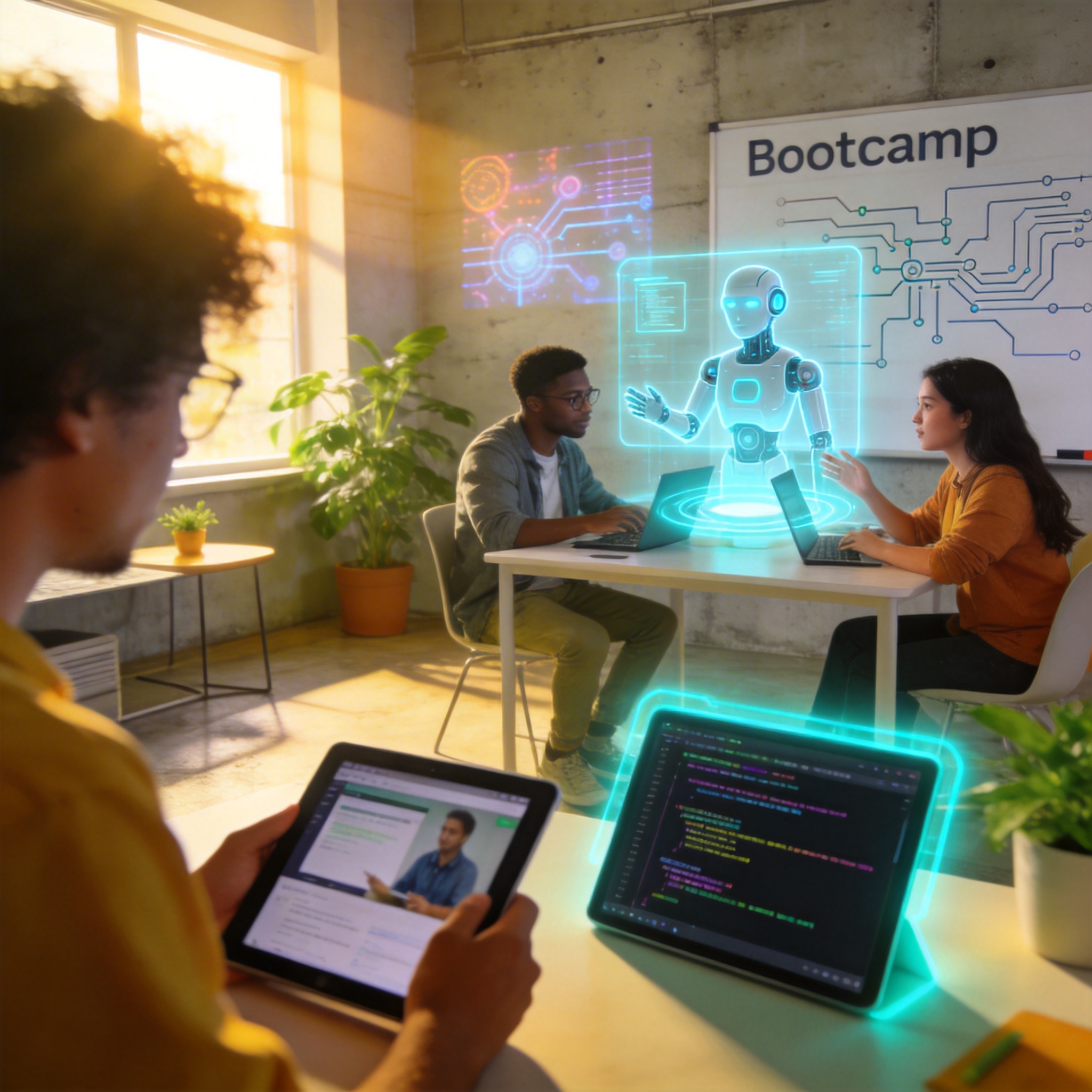
Diverse young professionals learning through online courses, bootcamps, and AI tutors in a modern, collaborative environment.
Adapting to Constant Change
The interplay of these five areas—junior developer prospects, skill evolution, role redefinition, specialist versus generalist debate, and educational value—will shape the future of software development. Some companies may reduce junior hiring, while others expand into new areas. AI will automate routine coding but also raise standards for human-interacted code. Developers might spend mornings reviewing AI output and afternoons designing high-level architecture.
To remain relevant, software developers should focus on technological trends while maintaining a healthy skepticism. Updating skills, diversifying capabilities, and emphasizing uniquely human attributes such as creativity, critical thinking, and collaboration are crucial. Regardless of whether the future brings a resurgence of manual programming or a world where code writes itself, there will always be a demand for engineers who can think holistically, learn continuously, and drive technology to solve real-world problems.
Stay Ahead of the AI Curve
Join 50,000+ subscribers getting the latest AI tools, trends, and tutorials delivered to their inbox weekly.
No spam, unsubscribe at any time.